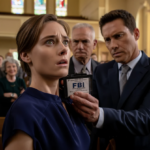
Sergeant Elias “Eli” Thorne was no rookie soldier. At 35, he had completed three tours in various global hot spots. He carried on his shoulders not only the heavy rucksack of an infantryman but also the emotional weight of memory, specifically the image of his younger sister who died in a traffic accident before he enlisted. This trauma had made him a reserved, resolute, and constantly vigilant soldier.
Eli’s unit was stationed at a small Combat Outpost (COP) in Helmand Province, Afghanistan. Life there was a monotonous blend of long days and the invisible, underlying tension of potential threats. The dust permeated every corner, dulling the color of both the uniforms and any flicker of hope. For Eli, everything beyond the concertina wire and barbed fence was a potential danger.
The Near-Dead Rose Bush
Near Eli’s patrol boundary was a patch of barren land where an elderly Afghan man, named Hassan, appeared daily. Hassan spoke no English and wore only faded traditional clothes. He carried no weapons, showed no hostility, and displayed no signs of being a distraction. He carried only a clay pot and tended to a tiny, nearly dead bush. It was a rose bush, or at least the remnant of something that once was.
Eli found the act utterly pointless. This was a war zone, a place of survival, not a garden. Every time he patrolled, Eli maintained a safe distance, but he couldn’t help but observe Hassan. Hassan watered the bush with near-religious patience. He protected it from the wind and the desert sand, guarding it like a fragile treasure, a dying ember.
One morning, as Eli was returning to the COP after a pre-dawn patrol, a small, distant explosion rattled the ground—likely debris from old ordnance. Eli, momentarily startled in the dim light, tripped over a rock and twisted his ankle. The sharp pain forced him to lean against an old mud wall for support.
Just then, Hassan appeared, showing no fear or hesitation despite the sound of the blast. He saw the American soldier, fully equipped with weapon and armor, now vulnerable, clutching his leg, his face pale. Hassan put his water pot down and walked straight toward Eli.
Eli instinctively raised his rifle, warning Hassan to keep his distance. But Hassan’s gentle eyes, devoid of judgment or fear, made him hesitate.
Hassan offered Eli his water pot. The water was warm and slightly earthy, but it was the best thing Eli had tasted in his entire time at the outpost. Hassan said nothing, but knelt down gently, massaged Eli’s injured ankle, and then used a clean, torn piece of cloth from his pocket to apply a makeshift bandage.
Once Eli was more stable, he pointed at the struggling rose bush. “Why?” Eli asked, gesturing toward the plant. “It’s dead.”
Hassan looked at the bush, his deep brown eyes conveying immense sadness. He pointed at the plant, then up at the sky, and finally gently touched his chest. Eventually, he pulled out a creased, old photograph from his pocket. It was a picture of a girl about 8 years old, her face bright, sporting a wide, innocent smile.
“Daughter,” Hassan said, his voice husky, pointing at the girl in the photo, then back at the rose bush. “She… planted it.”
Eli understood immediately. The girl was gone. She was another anonymous casualty of the war, of the bombs, of the hatred Eli was fighting. That rose bush was a living memorial, Hassan’s last tangible link to lost hope and love.
Eli froze. He remembered his own sister. His sister had loved roses too. Suddenly, the barbed wire, the language barrier, the uniforms—everything dissolved. Between the two men was a shared void, a silence filled with the pain of loss, finding comfort in a near-dead plant.
Hope Always Sprouts
From that day on, Eli no longer saw Hassan as a ‘local’ or a ‘stranger.’ He saw him as a father, a man carrying the same wound he understood so intimately.
Eli began to change his routine. He secretly filtered water from the base (an action prohibited to prevent resource waste) and left it near Hassan’s pot. Then, he located some organic fertilizer in the supply depot and quietly sprinkled a small amount around the rose’s base during the night, when everyone slept. It was the covert act of kindness from a soldier trained for maximum vigilance.
Eli’s silent care was not immediately rewarded, but Hassan remained persistent.
In Eli’s final week at the COP, a miracle occurred. The dry, brittle bush, which everyone assumed was dead, sprouted a small, vibrant green shoot. Not long after, a tiny, pale pink bud began to unfurl.
Eli looked at it. It wasn’t just a flower. It was a symbol of life, of hope nourished by quiet kindness, despite the ongoing war and hostility. It was proof that suffering is the universal human language, and compassion is the strongest possible bridge.
The Farewell
The morning Eli departed, he wrote a small note in English and Pashto (translated by an interpreter): “Hope always blooms. Thank you, Hassan.” He placed it next to the rose bush, along with his old Zippo lighter, engraved with his sister’s name. He knew Hassan would understand.
Eli returned home, no longer carrying the bitterness and absolute vigilance he had arrived with. He carried the image of the small rose, a living testament that kindness and human connection could overcome every barrier created by war.
He had found the true meaning of his service in the least expected place: not in military victory, but in the act of sharing hope and mending a father’s broken heart on the other side of the battle line.
The Lesson: War may draw lines and breed enmity, but compassion and respect for another’s pain are the truly human lights that can sprout even in the most barren ground.
News

Quiet wins and loud losses: Offset’s emotional letter after the shocking sh00ting stuns fans
Sep 16, 2023; Boulder, Colorado, USA; Recording artist Offset attends the game between the Colorado Buffaloes and the Colorado State…

Escaping the cell, falling to the g.un: Offset’s d3:adly chase – warrant just recalled, but did “d3:ath” come knocking at the c@sino?
Getty Rapper Offset had a warrant for his arrest recalled mere weeks before he was shot outside a Florida casino … TMZ…
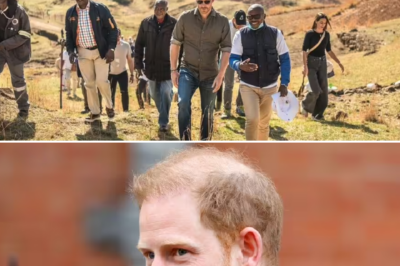
Harry officially speaks out before the recent noise related to the charity
A former royal butler has said this is the ‘last thing’ Harry would want (Image: Max Mumby/Indigo/Getty Images) The former royal…
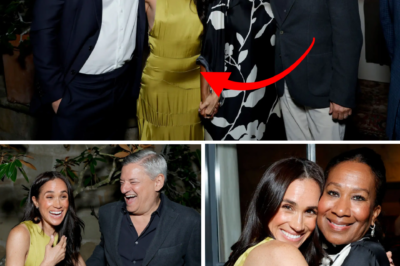
Meghan was careless in her choice of outfit, exposing her own flaws during an important party with Netflix
Prince Harry, Meghan Markle, Nicole Avant and Ted Sarandos at Netflix’s ‘Beef’ Season 2 Montecito Tastemaker event on April 10,…
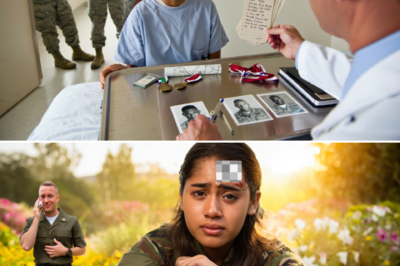
She was an elite warrior with extraordinary memorization abilities, but after a head injury, she forgot everything. However, there was one thing she was determined not to forget, no matter what
Chapter 1: The Perfect Machine Captain Morgan Vance was once described as the “living hard drive” of Special Operations Command…
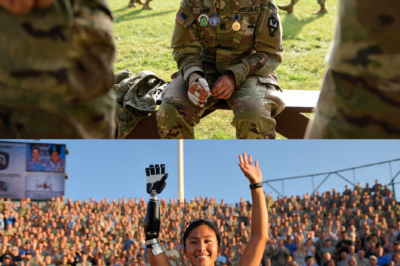
She was an elite warrior, but a disability in her hand made her feel insecure, and then a miracle happened that completely transformed her
Chapter 1: The Ghost of Fort Bragg The whistle of the wind through the pines at Fort Bragg, North Carolina,…
End of content
No more pages to load