Part 1
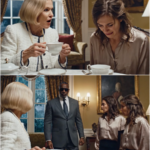
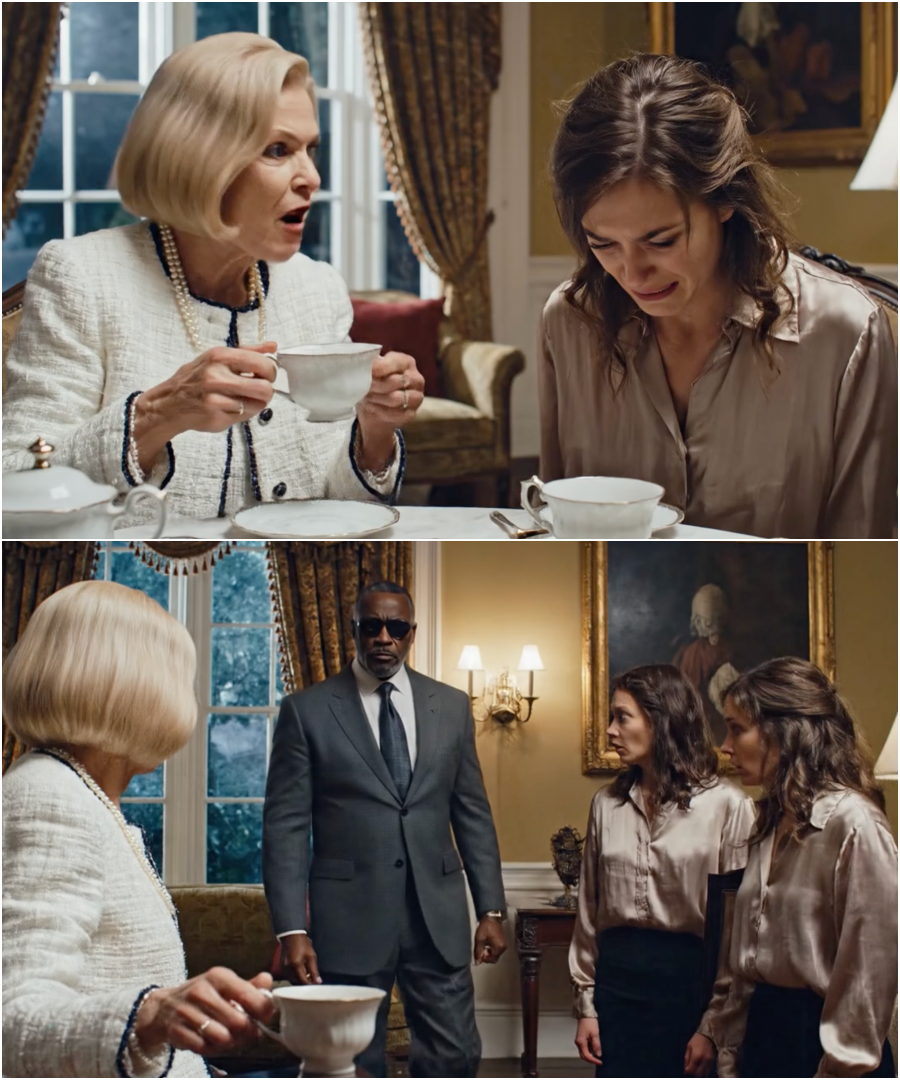
The teacup in my mother’s hand trembled exactly once. It was a rhythmic, calculated movement, the kind of subtle glitch you only notice if you’ve spent three years monitoring the facial tics of arms dealers in dark corners of Istanbul. I watched the amber liquid—Earl Grey, steeped for exactly four minutes—ripple against the edge of the porcelain. It was the “good china,” the set Margaret Ashford only brought out when she felt the need to reinforce the hierarchy. The gold-rimmed edges were a silent reminder that we were people of substance, people of Yale, people who mattered.
“She threw away her education to become a glorified secretary,” Mother said, her voice like a dry leaf skittering across a gravestone. She wasn’t looking at me. She was looking at her colleagues from the Georgetown Political Science department, offering up my life like a disappointing appetizer. “Four years at Yale for what? To answer phones in some government basement. I suppose someone has to file the paperwork, but I did imagine a daughter of mine would at least be the one writing it.”
The room smelled of expensive lemon polish and the faint, metallic scent of the silver tea service. It was a suffocatingly familiar atmosphere. I didn’t flinch. I didn’t defend myself. I just sat there in my $40 outlet-store blazer and my practical, scuffed flats, looking every bit the woman who spent her days wrestling with a temperamental photocopier. I folded my napkin with precise, square corners, letting the silence do what it does best: hold the weight of everything unsaid.
My name is Penny Ashford. I am forty-two years old, and for the past nineteen years, I have let my family believe I am the failure of the Ashford bloodline. My brother, Charles, is a partner at a firm that bills eight hundred dollars an hour to help corporations avoid the consequences of their own greed. My sister, Victoria, is an “international consultant” who spends more time at galas than in the field. And then there’s me. The one who supposedly answers phones at the Department of Agriculture.
“Penelope has always preferred the path of least resistance,” Victoria chimed in, adjusting her Chanel cuff. She gave me a sympathetic, tight-lipped smile that didn’t reach her eyes. “There’s no shame in it, Mother. Not everyone is built for the pressure of real influence. Some people just want the benefits and the pension.”
I felt the familiar itch at the base of my skull. A block away, a black SUV had just turned the corner. I knew it was coming before I heard the engine. I knew the cadence of the tires on the cobblestone. I’d spent the last two decades training my brain to be a radar, even when I was supposed to be a “secretary.”
The doorbell rang, a sharp, authoritative chime that cut through the polite laughter of the room. Richard, Victoria’s husband, stood up with a grin. He was a man who lived for the theater of “important people” arriving at important houses.
“That’ll be the Ambassador,” Richard said, straightening his silk tie. “He promised he’d drop by for a toast.”
But it wasn’t the Ambassador. I heard the front door open, followed by a sudden, jarring silence in the foyer. It was the kind of silence that happens when the oxygen is sucked out of a room. I didn’t move, but I shifted my weight just slightly, my feet finding their center. I knew that silence. It was the silence that follows Katherine Walsh.
As Richard’s voice drifted back from the hallway—hesitant, confused, stripped of its usual bravado—I realized the nineteen-year charade was about to end in the most spectacular way possible. But it wasn’t the reveal that worried me. It was the fact that Walsh never left Langley unless something was already on fire.
The Director of National Intelligence walked into the sitting room, and for the first time in my life, my mother dropped her teacup.
Part 2
Porcelain shattered against hardwood.
No one moved.
My mother stared at the woman in the doorway as if reality itself had fractured along with the teacup. Victoria’s smile froze mid-performance. Charles blinked like a man trying to recalculate a balance sheet that no longer made sense.
Katherine Walsh didn’t raise her voice. She didn’t need to.
Her presence did the work for her—controlled, surgical, absolute.
Her eyes swept the room once, cataloging everything: exits, faces, power dynamics. Then they landed on me.
“Officer Ashford,” she said.
Not Penelope. Not Miss Ashford.
Officer.
The word hit the room like a gunshot.
I exhaled slowly and stood.
Nineteen years of careful posture—slouched shoulders, lowered gaze, quiet compliance—fell away in a single motion. My spine straightened. My weight shifted forward. My awareness expanded, mapping the room the way it always had beneath the surface.
“Yes, ma’am.”
Behind me, I heard my mother’s breath catch.
Walsh stepped fully into the room. Two agents remained in the hallway—silent, watchful shadows.
“We need to go. Now.”
There it was. No explanation. No ceremony.
Something was burning.
“I’m in the middle of—” I gestured lightly toward the table.
“You’re in the middle of nothing that matters anymore,” Walsh replied. Not cruelly. Just factually.
That’s when my mother found her voice.
“I’m sorry,” she said sharply, recovering just enough of her authority to sound offended. “I think there’s been some sort of mistake. This is my daughter. She works in administration—”
Walsh didn’t even look at her.
“Classified,” she said.
One word. End of discussion.
My mother’s mouth opened, then closed.
Victoria let out a soft, disbelieving laugh. “Penelope? This is absurd.”
Charles leaned forward. “If this is some kind of joke—”
“It’s not,” I said quietly.
And for the first time in my life, they all listened.
I reached down, picked up my coat—the same unremarkable coat I’d worn for years—and slipped it on. From the inside pocket, I pulled a thin leather badge wallet.
I hadn’t shown it to anyone in nineteen years.
Not them. Not anyone outside the work.
I flipped it open.
Gold caught the light.
Silence deepened into something heavier—something closer to fear.
“I don’t answer phones,” I said.
No one spoke.
Walsh turned toward the door. “Vehicle’s running.”
I followed her without another word.
Behind me, I heard my mother whisper, almost involuntarily—
“…what have you done?”
I didn’t turn around.
Part 3
The SUV door shut with a solid, final thud.
Inside, the world narrowed.
Tinted glass. Secure comms. The faint hum of encrypted systems coming online.
Walsh didn’t waste time.
“Three hours ago, we lost contact with an embedded asset in Eastern Europe,” she said, handing me a tablet. “Deep cover. Non-official status. If he’s compromised, we have a cascade failure across four networks.”
I scanned the file.
Then I stopped.
I knew the name.
Not from paperwork.
From field memory.
“Impossible,” I said. “He was dark six years ago.”
“He wasn’t,” Walsh replied. “He was reassigned. Only three people knew. You’re one of them.”
I felt something shift—something cold and precise locking into place.
“Why me?” I asked, though I already knew the answer.
Walsh looked at me directly.
“Because you built the original network. And because if it’s collapsing…” she paused, “…you’re the only one who can tell us where it breaks.”
Outside, the city blurred past, unaware of how close it might be to something catastrophic.
I leaned back, closing my eyes for just a second.
In my mind, the old maps lit up—faces, locations, coded signals, contingencies buried years deep.
Nineteen years of pretending to be invisible.
Nineteen years of letting them believe I was nothing.
I opened my eyes.
“Divert to Langley,” I said. “And get me a secure line. I need to wake up a ghost.”
Walsh gave a single, approving nod.
As the SUV accelerated, I caught a faint reflection of myself in the darkened window.
Not the woman in the outlet-store blazer.
Not the daughter who wasn’t good enough.
Something else.
Something they were never meant to see.
Back in the quiet house filled with broken porcelain and unanswered questions, my family would spend years trying to understand who I really was.
They wouldn’t.
Because the truth was simple.
I wasn’t the failure.
I was the contingency.
News
A MOMENT OF ANGER… A LIFETIME OF L0SS — Teen Girl, 16, F@tally St@bbed in Sh0cking Dispute That Turned D3adly in Seconds
THE GRIEF-STRICKEN family of a murdered schoolgirl has paid tribute to their “beautiful princess”. Tragic Chloe Watson Dransfield, 16, was…
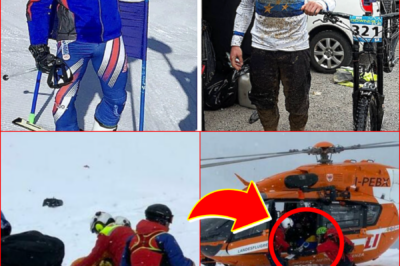
NO ONE EXPECTED THIS TO HAPPEN… — Federico Giubilato, Italian Engineer, D!es After 820ft-Wide Avalanche Buries Him During Off-Piste Ski Trip in Austria
Tragedy struck when Federico Giubilato and a friend went skiing off-piste at Marchkopf, Austria, as an 820ft-wide avalanche left them…

🎤 HOMECOMING MOMENT — Snoop Dogg Returns to Long Beach for a Major June 6 Show… And It Feels Bigger Than Just Music
The Long Beach Amphitheater is set to open June 6 in style when legendary rapper and Long Beach native Snoop…

When your heart isn’t done… — Cardi B Breaks Down as Breakup With Stefon Diggs Turns Messy, And The Emotions Are Spilling Into Public View
“When your heart isn’t done…”: Cardi B breaks down over betrayal amid messy breakup with Stefon Diggs Stefon Diggs, the…

BACK-AND-FORTH ESCALATES — Lil Mikey’s D3ath Draws Renewed Attention to a Chicago Hood’s “Backdoor” Past, And Not Everyone Is Saying It Out Loud…
Lil Mikey’s death initially spread like a familiar shock within the landscape of Chicago street violence — sudden, cold, and…

🚨 EXPLOSIVE CLAIMS ERUPT — 50 Cent Accuses Shaniqua Tompkins of Using Court Case to Publicly Shame Him… And The Fallout Is Getting Messier by the Minute…
LONDON, ENGLAND – JULY 3: 50 Cent performs onstage during a concert at Tottenham Hotspur Stadium on July 3, 2025…
End of content
No more pages to load