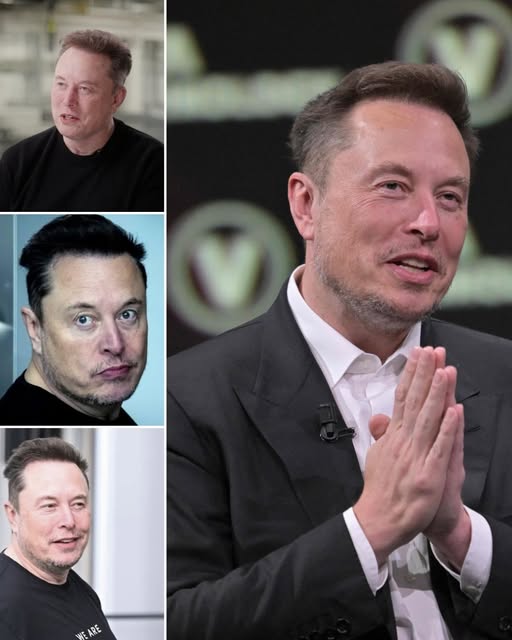
Elon Musk has launched one of the most dramatic legal challenges in modern tech history, seeking up to $134 billion from OpenAI and Microsoft in a dispute that strikes at the heart of artificial intelligence, corporate control, and the ownership of innovation.
At the center of the conflict is Musk’s claim that the companies reaped “wrongful gains” from OpenAI — gains he argues would not exist without his early financial backing, strategic guidance, and public credibility during the startup’s formative years. According to Musk, OpenAI’s transformation from a nonprofit research lab into a commercial AI powerhouse closely aligned with Microsoft represents a betrayal of its original mission — and of those who helped bring it to life.
A Partnership That Turned Into a Rift
Musk was one of OpenAI’s founding figures, helping establish the organization with the stated goal of developing artificial intelligence for the benefit of humanity, not private shareholders. In its early days, OpenAI positioned itself as a counterweight to Big Tech dominance, pledging transparency and open research.
But as AI capabilities accelerated — and commercial opportunities exploded — OpenAI’s structure and priorities shifted. The company adopted a “capped-profit” model, entered into a deep and lucrative partnership with Microsoft, and began tightly controlling access to its most powerful models.
For Musk, that shift marked a breaking point.
He contends that OpenAI’s current trajectory is fundamentally incompatible with the nonprofit principles he supported — and that Microsoft’s massive financial and strategic gains flowed directly from work he helped enable.
The $134 Billion Claim
The eye-watering figure at the heart of the dispute reflects Musk’s argument that OpenAI’s technology — now deeply embedded in Microsoft’s ecosystem — has generated extraordinary value. From AI-powered cloud services to productivity tools and consumer-facing products, Microsoft has woven OpenAI’s models into its core business.
Musk claims those gains were built on early contributions he made in good faith, under assumptions that no longer apply. In his view, the benefits were privatized, while the original vision was abandoned.
By seeking restitution, Musk is not just pursuing compensation — he is challenging the legitimacy of how AI value has been consolidated.
More Than Money: A Battle Over Control
While the financial stakes dominate headlines, the dispute is about far more than dollars.
At its core, this is a fight over:
Who controls advanced AI systems
Whether nonprofit ideals can survive commercial pressure
How early contributors are treated once technology becomes profitable
Musk has repeatedly warned about the dangers of concentrated AI power, arguing that a small number of corporations controlling advanced models poses risks to society, competition, and democracy itself.
This case turns those warnings into a legal confrontation.
OpenAI and Microsoft Push Back
OpenAI and Microsoft strongly reject Musk’s claims, maintaining that OpenAI’s evolution was necessary to fund the enormous costs of cutting-edge AI development. They argue that partnerships, commercialization, and controlled access are essential for safety, scalability, and continued innovation.
From their perspective, Musk’s role — while significant in the early days — does not entitle him to retroactive claims over value created years later under entirely different structures.
The companies are expected to argue that Musk voluntarily stepped away and that OpenAI’s success is the result of thousands of employees, billions in investment, and ongoing research — not any single individual.
Why This Case Matters
Regardless of the outcome, the case could have far-reaching consequences for the tech industry.
It raises uncomfortable questions:
Can founders or early backers reclaim value if a company abandons its original mission?
Do nonprofit tech initiatives lose moral standing when they commercialize?
Should AI — potentially the most powerful technology ever created — be treated differently from traditional software?
Legal experts say the dispute could influence how future AI ventures are structured, funded, and governed.
A Defining Moment for AI’s Future
For Musk, this battle aligns with his broader stance as both a critic and competitor in the AI race. With his own AI ventures now active, the clash underscores how ideological divides have hardened into open warfare.
What began as a collaborative effort to safeguard humanity’s future has become a high-stakes confrontation between some of the most powerful forces in technology.
And as courts weigh Musk’s demand for up to $134 billion, the verdict may decide more than money — it may determine who gets to define the future of artificial intelligence.
News

Drama EXPLODES: Married At First Sight Australia Star Bec Zachariah Blames Secret Health Struggle for Brut-al Treatment of Alissa Barmonde
MAFS Australia has already delivered no shortage of drama this series. And now bride Bec has opened up about a…

Our Kids Are Still Waiting for Him… — Wife Breaks Silence After Beloved Father-of-Four Ki-l-led in Sh0cking Melbourne Crash
A devastated wife has spoken out after her husband spent the week fighting for life after being mowed down outside his home…

WORDS TURNED D-E-A-DLY? — Jaro City’s Lil Mikey Gu-nned Down After Explosive Argument Tied to Viral Diss
The hip-hop community is once again grappling with tragedy following the fatal shooting of Jaro City rapper Lil Mikey, an…

IT WAS ALL GONE IN MINUTES — Community Heartbreak as Heroic Grandparents Lose Home in Sh0cking Blaze
An Adelaide community is rallying around two much‑loved grandparents and volunteers who have lost everything in a ferocious house fire….
HE SAID TOO MUCH? — NC Rapper Gu-nned Down Moments After Sh0cking Facebook Live Confession
A shocking and deeply disturbing incident has rocked the hip-hop community after a North Carolina rapper was fatally shot just…

HIS STORY ISN’T ADDING UP — Tiger Woods’ DUI Arrest Takes Dark Turn as New Details Raise Serious Questions
Tiger Woods called President Donald Trump in the moments after his shocking car crash in Florida, new bombshell footage appears to show. The golf…
End of content
No more pages to load