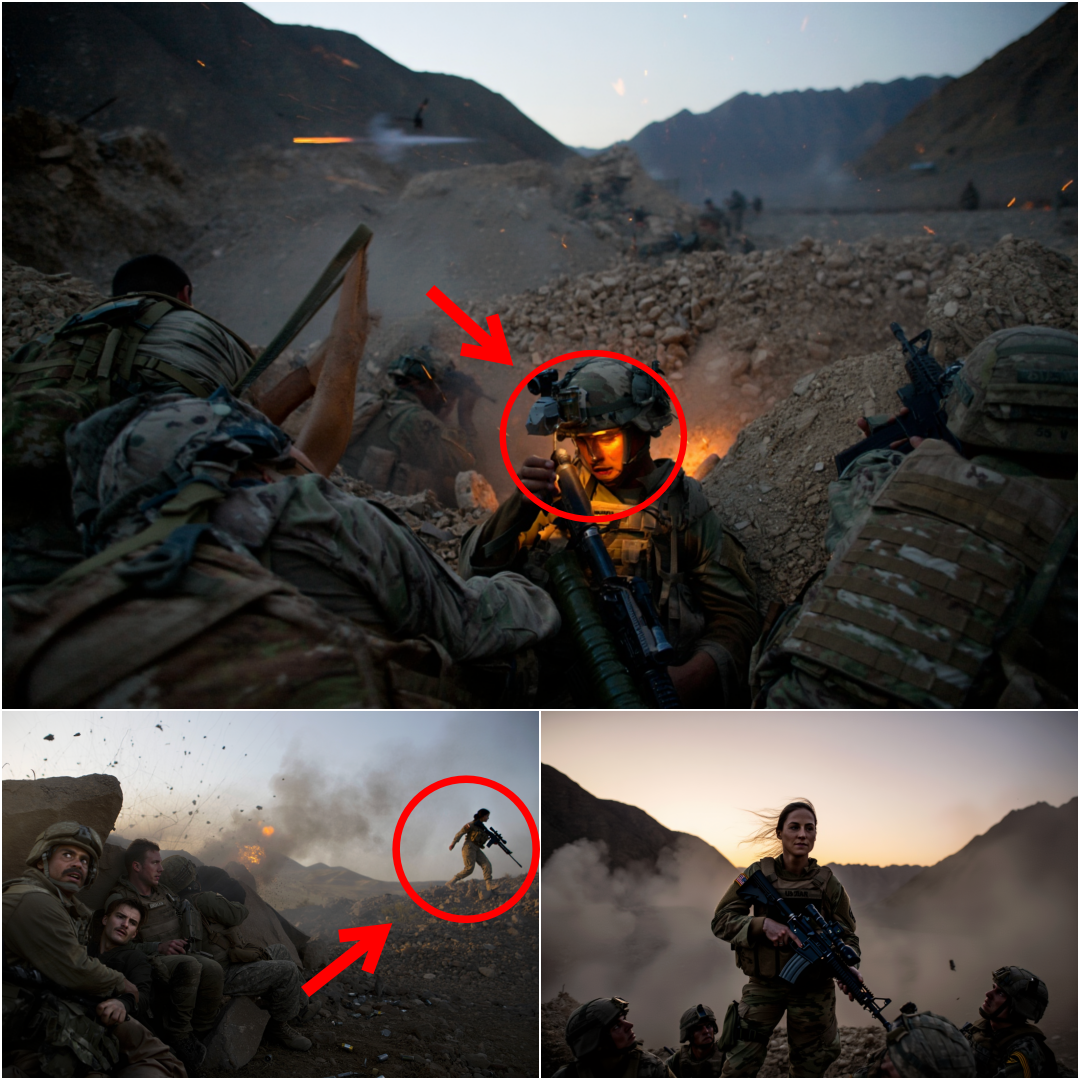
The Kunar highlands were still waking when Sergeant First Class Norah Callaway moved alone through the unforgiving slopes — a shadow among sharp rock and dust. The radio channel had gone silent twenty minutes earlier. A twelve-man Ranger team was trapped somewhere ahead, cut off and pinned in a narrow valley, and until air support arrived, they were on their own.
Norah was not supposed to be here.
Back at the FOB, she was officially a designated marksman — logistics, overwatch, route security. Unofficially, everyone who actually paid attention knew the truth: she was one of the best shots in the entire valley. But Staff Sergeant Greer didn’t believe that. Or maybe he did, and that was the problem.
Three days earlier, Greer had shut her down in front of an entire platoon, barking that maybe she should “go back to doing whatever women did before pretending they could fight.” No one defended her. No one met her eyes. And then he benched her — seventy-two hours of base duty, no missions, no say.
But when the distress call came — Rangers in contact, multiple casualties, fifteen minutes until air cover — Norah didn’t wait. She simply slung her M110, grabbed her go bag, and walked out of the wire without a sound.
As she climbed the ridge, dust stinging her teeth, the old lessons came back — her grandfather’s voice, the man who had taught her what war really took. She could still see him sitting on the porch of their ranch outside Billings, cleaning his rifle as dawn rolled across the open prairie.
“Being underestimated is your greatest weapon, kid. People who don’t see you coming can’t stop you.”
He had been right about more than she realized.
By twelve, she was outshooting grown men. By twenty, she enlisted the day the combat exclusion policy dropped. She failed sniper school the first time — too slow on target calls. She passed the second with one of the top scores, instructors calling her calm, uncanny, instinctive.
But instinct isn’t loud, and ego is.
Greer never trusted her judgment. Three days earlier, she’d warned him about a patrol route — a narrow valley with no cover, perfect ambush territory. He ignored her. Two soldiers died. That was when something inside her shifted. She confronted him, told him directly that his planning was going to get people killed. He silenced her with one sentence:
“Maybe the problem is you think you know more than everyone else.”
Now twelve Rangers were dying in the exact kind of kill zone she’d warned him about.
And Norah was the only one close enough to reach them before the Taliban overran the valley completely.
At 2,000 meters elevation, the terrain opened into a shallow basin flanked by high rocky shelves. The Taliban controlled the upper angles — the worst possible ground to be trapped under. Norah crawled forward on her stomach, glassed the ridge, and saw it immediately:
Multiple firing positions
Two machine gun nests
At least a dozen fighters closing in
Down below, the Ranger team was clustered behind a line of broken stone, two wounded and bleeding, ammunition running low.
She checked wind, distance, and breathing. Calm. Still. Unshakable.
She thought of her grandfather’s words:
“The hardest part isn’t the shot. It’s knowing what happens if you get it wrong.”
Then she took the shot.
One machine gunner fell before his finger completed the second burst. Another paused just long enough for her to adjust holdover and press the trigger again. The Rangers below didn’t know where the support was coming from — but suddenly, the fire against them dropped by half.
Norah exhaled once, slid sideways along the ridge, and kept working. She didn’t stay in one spot more than three rounds — she knew counter-snipers were somewhere in the rocks.
Rounds snapped past her ear. One hit close enough to sting grit into her cheek.
She didn’t flinch.
She dialed elevation, waited two seconds for a fighter to lean out behind cover, and put a round clean through his chest.
Down below, the Rangers finally heard her voice on their emergency frequency:
“Blue team, stay down. You’ve got overwatch.”
Their platoon leader — blood on his sleeve, voice strained — didn’t waste breath.
“Who the hell is that?”
“Call sign Valkyrie.”
There was silence on the radio, just long enough for someone to understand exactly who had disobeyed orders to save them.
Then:
“Copy, Valkyrie. Engage at will.”
Taliban fighters began shifting toward her ridgeline. She knew she couldn’t hold that position alone if they got close. So she did the unthinkable:
She moved toward the enemy.
Using goat trails and shale outcroppings, she flanked left, descending to a rock shelf just thirty meters above a major choke point. She pulled a fragmentation grenade, waited until three fighters clustered behind a boulder to reload, and tossed it down the slope.
The explosion shook the ridge. A few fighters turned in time to see her rise from behind a rock — dust, smoke, and the long shadow of an M110 framed behind her.
She fired controlled pairs, and within twenty seconds, the entire left flank collapsed.
Below, the Rangers surged to their feet, laying fire into the chaos. Air support roared overhead — late, but not too late.
Norah pulled back behind a boulder, heart hammering, throat burning from dust. She could hear the distant footsteps of retreat — the Taliban breaking contact.
Only then did she realize her hands were trembling. Not from fear.
From the weight of what almost happened if she hadn’t acted.
She thought of the two soldiers who died three days earlier. Of Greer’s mocking voice. Of the silence of everyone who hadn’t spoken up.
No one underestimated her now.
She moved down into the valley just as the last gun smoke drifted off the rocks. Rangers stared up at her as if seeing a ghost step out of the dust — a lone sniper walking through ruin with nothing but steadiness in her stride.
Their platoon leader met her first.
“What the hell were you doing out here alone?”
Norah wiped grime from her cheek, slung her rifle, and spoke simply:
“I heard you needed help.”
He didn’t argue. He didn’t question orders. He just nodded, understanding everything without another word.
When she returned to base two hours later, Greer was waiting. She expected yelling, threats, punishment.
Instead, he looked hollow — and small.
“You disobeyed orders,” he said.
“And twelve men are alive because of it,” she answered, voice steady.
He didn’t speak.
He didn’t have to.
Command reviewed the radio logs, helmet cam footage, shot analysis, and casualty reports. The conclusion was unanimous: without Norah Callaway, the Ranger team would have been overrun before air support arrived.
Greer received a formal reprimand for negligence and removal from operational planning.
Norah received something else:
A promotion
A commendation
And something far more valuable — respect that could never again be taken away.
That night, she sat alone outside the barracks, cleaning her rifle under the stars just like her grandfather used to. Wind cut over the mountains in soft whispers.
Being underestimated had always been her greatest weapon.
But now — finally — they saw her coming.
And they still couldn’t stop her.
News

EXPL0SIVE — “BRU-TAL BLAST”: Prince Harry Sh0cks With Just Two Words Amid Sentebale Legal Storm
The Duke of Sussex is being sued by a charity he helped co-found in 2006 in honour of Princess Diana…

WHO IS PAYING FOR THIS TRIP? — Prince Harry AND Meghan Markle SPARK BACKLASH OVER CLAIMS PART OF THEIR AUSTRALIA TOUR IS FUNDED BY TAXPAYER MONEY
The team of Prince Harry and Meghan Markle, who are the Duke and Duchess of Sussex, had yesterday insisted their…
SH0CKING RELATIONSHIP ENDS IN TRAG-E-DY… — Jennifer Lieber sentenced after a sh00ting that left her cousin-turned-lover d*ad inside a mansion in Minnesota
The estranged wife of a Delta Airlines pilot fatally shot her cousin-turned-live-in boyfriend during a late-night drunken rampage and cried…
IN JUST SECONDS… — 3 people seriously att@cked as the scene at Grand Central Terminal descends into chaos
A maniac slashed three elderly people with a machete in an unprovoked attack and was fatally shot by cops at…
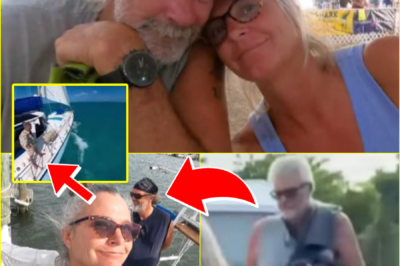
HE SAID HE WAS ASSAULT3D BY HIS WIFE… — Brian Hooker gives a striking statement amid the mysterious disappearance of Lynette Hooker
Lynette Hooker, left, and Brian Hooker. From Lynette Hooker/Facebook It has been nearly a week since she vanished at sea,…
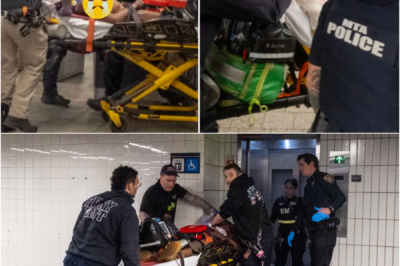
🚨 CHA0S ERUPTS AT Grand Central Terminal AS MACHETE-WIELDING ATT@CKER IS SH0T BY POLICE AFTER ST@BBING 3 ELDERLY COMMUTERS
A maniac slashed three elderly people with a machete in an unprovoked attack and was fatally shot by cops at…
End of content
No more pages to load